
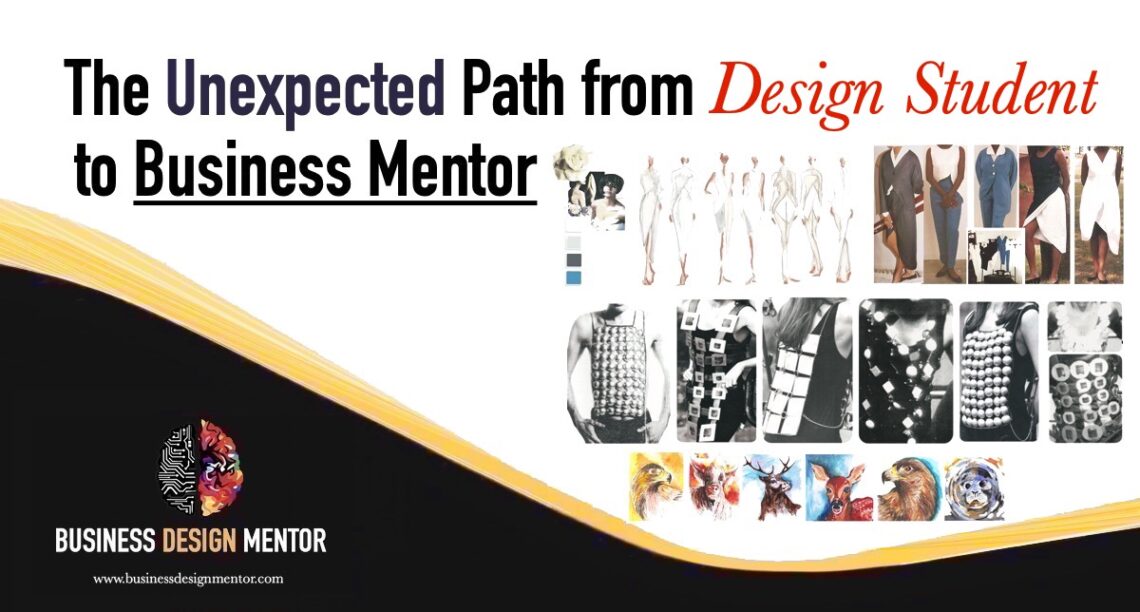
The Unexpected Path from Design student to Business Mentor
After attending a business training conference in Edinburgh last month, I was reminded of some great memories of my Art College days at Edinburgh College of Art. As I reflect on my choice 35 years ago to chose the ‘Art Student’ path and a career starting in Design. I reflect on the lessons gained & how choices shape your thinking, skills & career path. In particular how training as a Designer can equip you with a unique set of skills in Business.

Lesson 1: Overcoming the Fear of Failure
Unlike more traditional career routes and further education choices ‘Design students’ discover their role is to embrace what makes them different and creative. How to harness their skills to ‘Make, Create and Innovate’. Art College taught me not to be frightened to try new ideas & experiment and that failing is just part of the process towards success. Only with repetition, trial and error will you ever create something worthwhile and new.

In contrast to more traditional academic routes the design student develops a thick skin for rejection. You are ultimately judged on qualitative original outcomes through ‘public critique’ with your Design lecturer in a room full of your peers, not a private room with a professor. Training in design equips you with transferable skills for business- a healthy relationship in dealing with rejection, conflict and public criticism- a great starting point in business.
Lesson 2: Disruption & Change
The foundation year of an Art College degree is transformative due to the opportunity to have a taster of everything from Painting, Sculpture, Ceramics, Jeweller & Silversmithing, Glassmaking, Illustration, Animation to Furniture, Interior, Fashion, Textiles and Graphic Design.
This rich opportunity teaches students to pivot, move out of their lane, experiment- embrace change. Early on you learn skills are transferable – changing lane can be healthy. As a business mentor I always suggest to clients don’t be afraid to be different, to be open minded when new opportunities arise, and pivot when markets and technology change. The ability to take risks and try new things is ESSENTIAL in business.
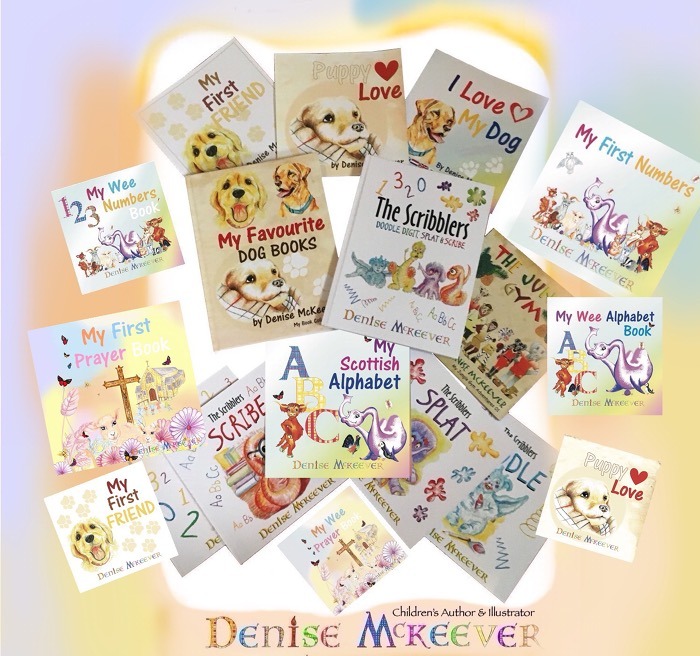
Over the decades I have moved confidently and without hesitation from Fashion Design to Jewellery Design, Textile Design, Brand Design, Product Design to Illustration & Publishing. Designers can quickly adapt to various roles as they have a creative aptitude for problem solving, gathering technical detail and refined motor skills. Then wash, rinse, repeat the steps of; Idea generation, research, planning, prototyping, branding and final product.
In the next few years these will be essential as data driven jobs and businesses are replaced by A.I. As Robotics will be the last phase of the A.I revolution the skills to think creatively, but more importantly those with refined motor skills will be the last jobs and businesses to be impacted.
You learn that as a ‘Creative’ like many of the attributes of the entrepreneur your skills are transferable, and your confidence to experiment and take risks differentiates you from many of your peers. With the uncertainty and disruption coming with the age of A.I businesses we will need more creatives- people who are unafraid of pivoting, adapting, changing lane and THINK differently!

Early on I discovered that my willingness to experiment and be different opened doors to opportunities from fashion shows, selling my creations to pop-stars (for those of you old enough The Shamen) and the confidence to turn-up and chap the door of Virgin records in London. Instilling in me that if you have the right product, in the right place and the right time -selling and sales is easy! Those weekly Art studio critiques of your latest design projects in a room full of your art student peers is a grounding in the harsh realities of Sales– the core skill of the business owner.
Lesson 3: Research & Reading
During my Art school days I spent countless hours in the College library reading and looking for inspiration from the catalogues of historical information and books on the principles of design.
Likewise our weekly routine was being sent to the Museum to review resources from the past to find inspiration and ideas. Before Google and Pinterest we had to take inspiration for colour schemes, design, pattern by taking photographs or drawing from inspiration gained visiting the Botanical Gardens, Textile shops or a weekend trip to London or Paris.
That painstaking process taught me patience, how to be resourceful, the importance of studying the basic principles of anything you want to Master whether in Design or in Business.
With everything in life read the instruction manual, learn the cheat sheets, listen to people who are successful and their book recommendations, every skill has a formula and pattern. And once you Master the basics the rest is practice till you make perfect as you develop your own style! Just like business- a business is a business, is a business- the tools, principles & skills are the same, transferable.

Lesson 4: The Journey is more important than the destination
Often in business we get caught up in the destination the final vision, the goal. And yes this is essential as a Designer knows -Vision Boards are integral to any project and a tool of the design industry adopted by business and self -help. But the journey is more important than the destination- if you don’t enjoy the journey the final creation or business will be soulless.
Sometimes wandering down a road less travelled makes life interesting – a challenge, an adventure.
Lesson 5: Problem Solving
Unlike a degree in mathematics, physics, law, or medicine where there is often only the pursuit to understand and conclude that everything has only one answer or fixed solution. The designers role is to generate various solutions to a problem, with the challenge to expand possibilities and limitations- the pursuit of original ideas and thoughts.

This basic principle combined with my early interest in business coming from a family of entrepreneurs, is where my interest began in ‘Business Models & their Design’. Unlike the people I meet who studied a degree in business, when I look at business I look beyond the traditional cookie cutter business model.
Most people today associate the word ‘Design’ with simply creating an aesthetic style or look. Instead of the broader meaning of ‘Design’ to have an idea and create something tangible that solves a problem and offers better solutions for the customer– in my case as a ‘Business Design Mentor’ helping the business owner design a very different type of business.
My interest lies in how you can innovate a business model to be more design efficient in how it functions operationally and leverages benefits in increased productivity, time saving or resource saving ‘Designing businesses fit for the 21st century’. The same principles I used in my first business in the contract management of uniforms.

If you find my articles interesting and you would like to learn more…….book a chat now! Do you need a Business mentor with new ideas and solutions not cookie cutter answers? Drop me an email info@businessdesignmentor.com or book an appointment now for a chat.

Denise McKeever
D.F.McKeever(Denise) is a Business Mentor & Author. As an experienced designer and ex-business owner & founder for over 25 years she offers a unique perspective to entrepreneurship, business and economics. Unlike other business mentors Denise offers a unique perspective in the use of creativity and design in building sustainable enterprises.


You May Also Like

Prepare for Recession Opportunities

What is Designovation?