
How to DESIGN a high-performing business model and out smart your Competitors?
One of the most critical components of Business Design is the effective assessment of operational functions within a business. Over the years, I’ve shared the following insights with many of my clients—and they remain consistently relevant.
‘Operations; the power and orchestration of organised systems, processes & people.’
The Enterprise; Black box Thinking by D.F McKeever
At the start of most mentoring sessions, I ask business owners and CEOs a simple but revealing question:
Do you live and work in chaos or in order?
For those who admit to operating in chaos, my next question is just as important:
Is there a senior manager i.e. their business partner or P.A that creates the ‘Order’ in their business?
If not I recommend that they attempt to quickly change their habits if they want to gain one of the most essential skills for business success and maximum efficiency.
A few very basic questions;
- If you were suddenly unable to work how long would it take one of your staff to find an important file without your assistance?
- Incrementally how much time does your business waste due to a lack of order & systems?
Even with the most basic repetitive actions, behaviours & habits.
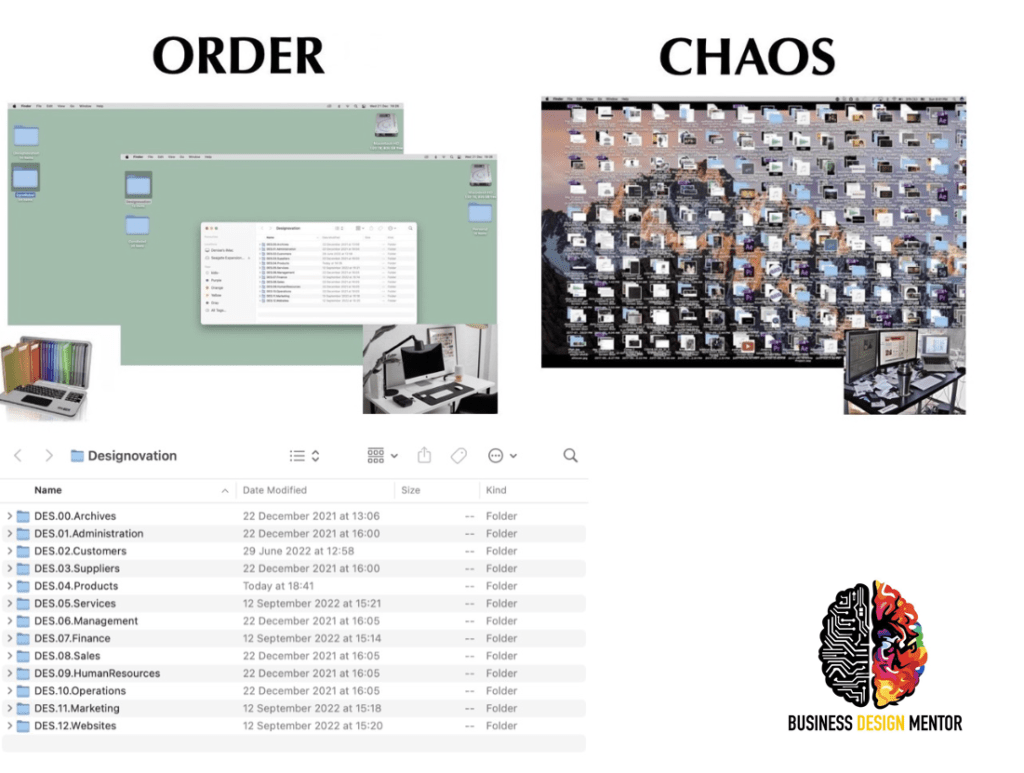
And yes there are lots of contributing factors why businesses succeed but from my experience and observations- businesses with a strong organised and methodical operating system will grow faster with stronger stability and less disruption than those without.
For me the role of operations in a business is the glue that keeps everything together and functioning like a Swiss watch. A business with strong operations will have a workforce with less stress, more confidence and certainty compared to a business that works and lives in ‘Chaos’.
‘Your own unique operational strength?’
It is essential that every business owner should define ‘Your own unique operational strength’. The answer to this can often be found in new innovation, technology, resources, cultural changes and needs, or an idea based on your own specialised knowledge of your sector & industry.
- Where is there unnecessary waste? In time, resources and mistakes?
- Where could A.I replace basic repetitive tasks?
- What technology are you competitors using to improve efficiencies in time, labour and resources?
- How can you systematised Recruitment & Training especially?
- What ISO standards do you have in your business?
- What new Software could you implement to automate reports, data, analytics? Compatible and integrated ERP & CRM system?
ERP- Enterprise resource Planning: software that organisations use to manage day-to-day business activities such as accounting, procurement, project management, risk management and compliance, and supply chain operations.
CRM- Customer Relationship Management: technology used to manage interactions with customers and potential customers. A CRM system helps organisations build customer relationships and streamline processes so they can increase sales, improve customer service, and increase profitability.
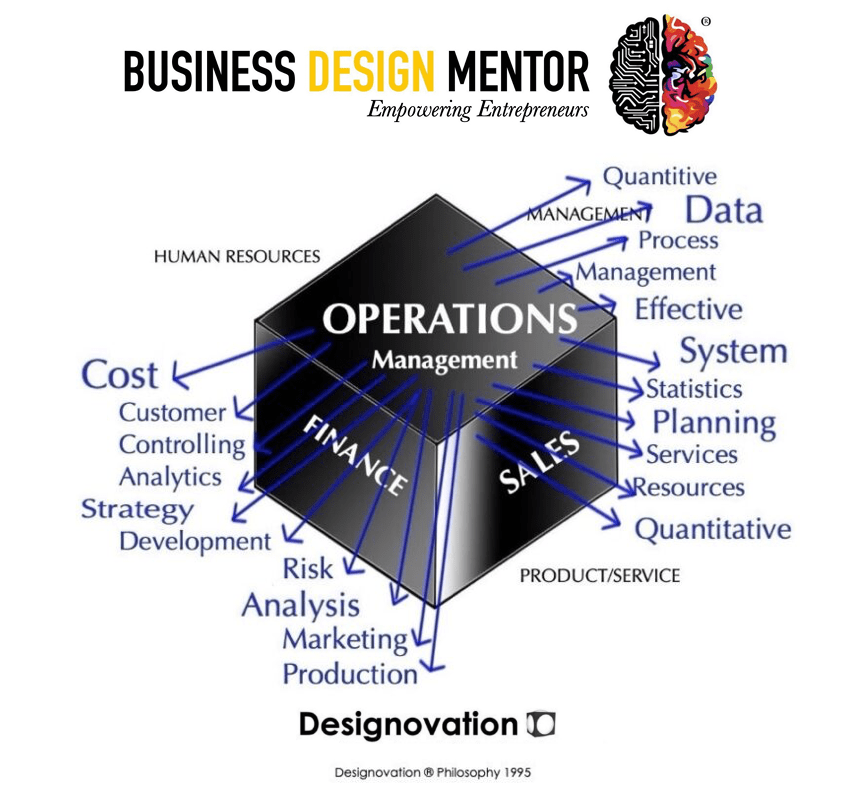
Often the easiest common denominator business owners look at when looking at operational efficiencies is by looking at financials. Either in the reduction of materials, production, time or labour costs. Those who can look beyond conventional thinking and become innovative in how their business operates will reap higher profits, lower operating costs, faster recruitment & training lead times, and offer a better offering to any potential investor.
How to make your Business Operations more efficient?
A brilliant example of this is demonstrated by the scene in the movie ‘The Founder’ with Richard & Maurice McDonald as they tirelessly refine the foot print of the McDonalds franchise. As a mum of 3 young adults how does the largest and most successful food franchise in the World function seamlessly with a work force of primarily 16 year old’s? Who in may cases can’t do the basics like keep their bedrooms tidy.
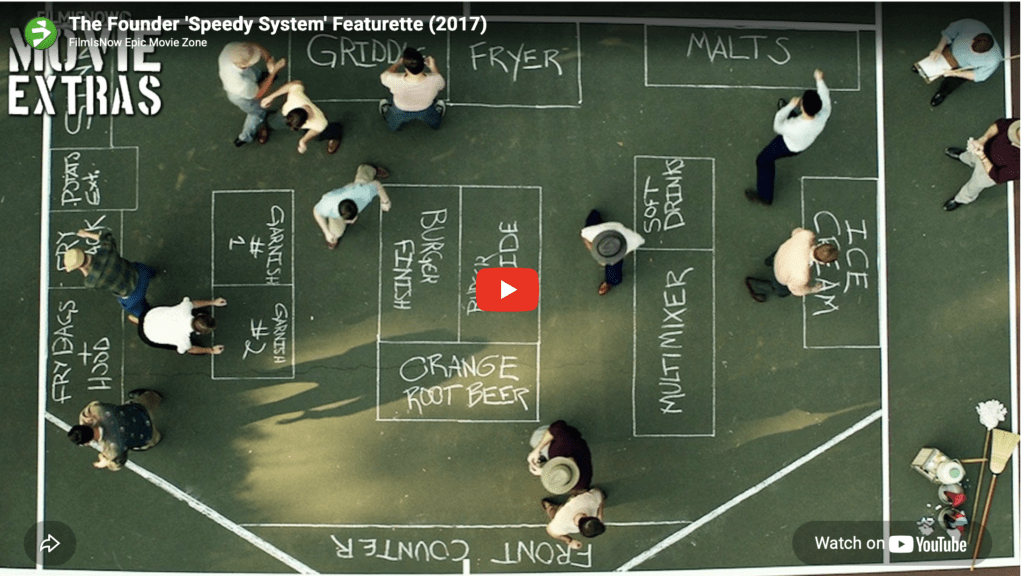
The McDonald brothers had a great understanding of minimising and maximising every incremental component of their business:
- Strategically designing the minimum required business premises by square footage- reducing rental, building & maintenance costs.
- The operational design & layout of their Kitchens which in turn: Reduced and identified the exact amount of employees required per shift to operate at full capacity, controlling man hours and wages.
- Creating a turn-key process for creating a ‘Big Mac burger’ that could be replicated by any McDonlads franchise anywhere in the world and still taste and look the same.
- Creating a business where everything could be incrementally measured- from the time a customer places an order for food to receiving it, the exact costings for creating each meal, the costs for operating a franchise, the expected daily profits plus much much more-and operated by teenagers!
Ultimately the CEO that builds a business with organised systems and processes & people- will benefit from one of lives most precious assets ‘TIME’.
‘Learn to Measure everything’
‘To fully execute the power & control of orchestration of organised systems, processes & people you must find a means in your business of measuring everything. Without a means to measure all our resources and efforts we cannot define success or failure, progress or improvement.’ The Enterprise; Black box Thinking by D.F McKeever
It is therefore essential that you try and find efficient ways and means to calculate all increments of time, labour and resources in your business. This is where technology, innovation and A.I can offer businesses in the 21st century opportunities to understand their business metrics in real time.
One individual who demonstrates the importance of Operations Management is W. Edwards Deming. The American statistician W. Edwards Deming has been universally acclaimed as one of the founding fathers of Total Quality Management, if not the founding father. The revolution in Japanese manufacturing management (following WWII) that led to the economic miracle of the 1970’s & 1980’s has been attributed largely to Deming.
Deming’s quality philosophy and outlook was both simple but radical. He asserted that organisations that focused on improving quality would automatically reduce costs while those that focused on reducing cost would automatically reduce quality and actually increase costs as a result.
Deming’s expertise as a Statistician brought a revolutionary approach to business (manufacturing) and demonstrates effectively how attention to small detail and systems has massive consequences on business success.
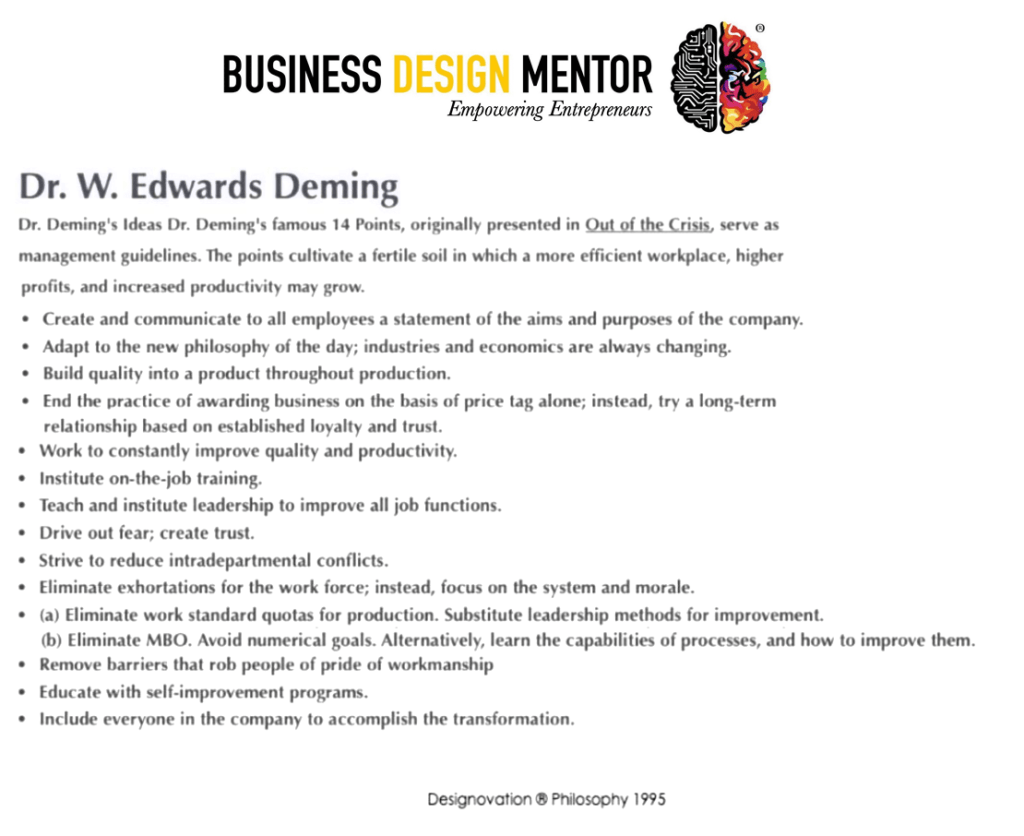
‘Continuous Improvement’
The Operating system in a business is never ever finished, at its essence it never ceases to change and evolve. For this reason you should consistently search for new solutions to improve efficiency in your business through the use of New Technology, innovations, AI, Software, new skills etc. Better productivity comes from the organised person who finds new ways and solutions of reducing wasted resources and unnecessary repetition.
If one of your customers had to visit you unannounced would your workplace convey;
- The workplace of a Professional, a Great Crafts person or Master?
- An office or place of impeccable order?
- A workshop of materials & tools carefully and strategically organised?
- Or the contrary?
‘Time the new gold.’
Remember the greatest benefit a good operating system will give you is the currency of ‘Time’.
Unfortunately time only has a 24 hour shelf life which we cannot buy any more of at the end of the day or store away for a rainy day. Some of us spend it aimlessly without thought or intention. Others grasp it so tight that we forget how to embrace and enjoy it, before long Time will become the new gold.
The Enterprise; Black box Thinking by D.F McKeever
The business owner that lives in ‘Order’ and has an organised mind values this commodity, focusing on investing it rather than spending it, knowing that we must act now as this minute, hour or day will not come again.
For may of you having this rare little time off from work over the Easter break. Think of how nice it would be to have a little more time with your families if your business was a little more organised and orderly. Interested in having a chat with the Business Design Mentor? Book a free teams now!
Have a lovely weekend!

Denise McKeever
D.F.McKeever(Denise) is a Business Mentor & Author. As an experienced designer and ex-business owner & founder for over 25 years she offers a unique perspective to entrepreneurship, business and economics. Unlike other business mentors Denise offers a unique perspective in the use of creativity and design in building sustainable enterprises.


You May Also Like
What can Football’s Greatest Leader Teach Us About Business?

The Wee Business Book Series 2024